


How to Stop a Puppy From Barking: A Humane Step-by-Step Guide
Quick Answer
To learn how to stop a puppy from barking, first check what your puppy needs and what caused the noise. Reduce stressful triggers, reward quiet moments, and teach a calm alternative behavior. Never punish barking or ignore signs of fear. Seek professional help if your puppy seems distressed or cannot settle.
Key Takeaways
Puppies bark for many reasons. The right response depends on what happens before the barking and how your puppy feels. These seven points can help you choose a safe approach.
Barking is normal puppy communication, so aim to reduce problem barking rather than eliminate every sound.
Check for toilet needs, pain, fear, and discomfort before treating barking as a training problem.
Attention barking can grow when barking repeatedly earns play, food, or attention from people.
Reward brief quiet moments and teach your puppy another way to ask for what it wants.
Reduce stressful sights and sounds while helping your puppy learn to stay calm around mild triggers.
Barking during confinement or separation may signal distress, not a puppy demanding attention.
Track barking patterns and seek qualified help when fear, panic, or sudden changes are involved.
Your first task is to understand the barking. Once you know the likely cause, you can choose a response that helps your puppy learn.
How to Stop a Puppy From Barking: Start With These Six Steps
Start by meeting your puppy's needs, then teach the behavior you want. A quiet cue alone will not fix every barking problem. Your puppy may need a toilet break, more space from a trigger, or help feeling safe.
The ASPCA's guide to dog barking explains that barking serves different purposes. These include seeking attention, greeting people, sounding an alarm, and expressing frustration. The steps below use that cause-first approach.
Step 1: Check What Your Puppy Needs
Before trying a command, look at the situation. Has your puppy been outside recently? Is its water bowl empty? Has it been awake through a long period of play?
A puppy near the back door may need to go outside. Barking during handling could signal pain or discomfort. A puppy facing a loud visitor may feel scared.
Address the need first. Offer a toilet break when appropriate. Provide rest if your puppy seems tired. Move away from anything that appears frightening.
The RSPCA's puppy care guidance supports gentle training, rest, and care suited to a growing puppy.
If barking begins suddenly and your puppy seems unwell, contact your veterinarian. Do not try to solve possible pain with obedience training.
Step 2: Find the Barking Trigger
Watch what happens just before your puppy starts barking. A passing dog, a doorbell, a visitor, or a toy held out of reach may be the trigger.
Next, watch your puppy's body. Does it look loose and playful? Does it move away, freeze, or seem unable to settle?
These clues help you form a reasonable guess. They do not prove a diagnosis.
Try noting three things: what happened first, how your puppy reacted, and what happened after you responded.
For instance, a puppy may bark each time someone reaches for its favorite ball. If the person throws the ball right away, the puppy may learn that barking starts the game.
Step 3: Reduce Stress or Distractions
Make the situation easier before asking your puppy to learn. If it barks at people outside a window, close the curtain or move it to another room.
If a visitor causes fear, increase the distance. Let your puppy observe from a safe place rather than forcing a greeting.
The RSPCA's barking advice describes how routines, suitable activity, and changes to the environment can help manage barking.
Management does not always solve the underlying cause. Yet it can stop a puppy from facing the same hard trigger all day. That gives you more chances to reward calm behavior.
Step 4: Reward Quiet Moments
Choose an easy setting where your puppy feels relaxed. Keep a few small treats ready.
When your puppy pauses and stays quiet, say a short marker word such as 'yes.' Then give a reward. You can also use calm praise or gentle play if your puppy enjoys it.
Reward the quiet moment, not a fresh burst of barking. Good timing helps your puppy work out which behavior earned the treat.
For clear attention barking, avoid giving the requested optional reward during the bark. Wait for a calm pause when your puppy can manage one.
Never apply this rule to distress. A scared puppy needs help feeling safe, even if it is barking.
Step 5: Teach a Calm Alternative
Give your puppy something useful to do instead of barking. A simple sit, a look toward you, or moving to a mat can work in the right setting.
Teach the skill during a quiet part of the day. Reward easy attempts before adding distractions.
Suppose your puppy barks whenever you pick up its leash. Practice lifting the leash a little, then reward calm behavior. Set it down before the puppy becomes too excited.
Over time, the leash can become a cue for a calm response rather than frantic barking. Move at your puppy's pace.
The site's Positive Puppy Commands page offers more context on foundation cues and everyday puppy communication.
Step 6: Repeat in Manageable Situations
Practice where your puppy can succeed. A quiet living room may be easier than a busy front porch.
Once your puppy stays relaxed in one setting, add a small challenge. You might move a little closer to a window or ask for a sit while another family member walks past.
If barking rises sharply, make the next attempt easier. Do not keep pushing through fear or panic.
Family members should use a shared plan. If one person rewards calm behavior while another starts a game after barking, learning may be less clear.
Progress rarely follows a perfect line. Look for calmer reactions and faster recovery, not silence in every situation.

Why Do Puppies Bark So Much?
Puppies bark to communicate, react, and seek things they want or need. The sound alone cannot tell you why. Context, body language, and what happens afterward offer better clues.
The RSPCA Australia's guidance on excessive barking describes several possible causes. These include excitement, boredom, fear, frustration, and distress. A response that works for one cause may be wrong for another.
Attention and Demand Barking
Picture a puppy sitting beside the sofa. It barks once, and someone looks up. It barks again, and the person throws a toy.
The puppy may learn that barking brings attention or starts play. Even scolding can provide attention in some situations.
For a puppy that is relaxed and has no unmet needs, change what earns the reward. Give attention when it sits quietly, brings a toy, or approaches without barking.
Avoid testing this method during fear or panic. Barking that sounds like a demand may have another cause.
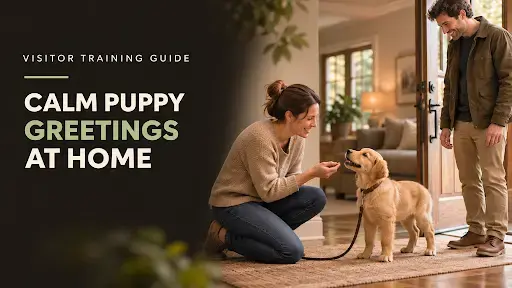
Excitement and Greeting Barking
A puppy may bark when someone comes home or a friend enters the room. Its body may be loose, with lively movement and eager attempts to approach.
Lower the excitement before allowing a greeting. Ask visitors to wait while you guide your puppy toward a calm choice.
Reward a brief pause or a simple behavior your puppy knows. Keep greetings short if excitement builds again.
Not all greeting barking is friendly. A puppy that backs away, freezes, or avoids contact needs more space. Do not force it to meet strangers.
Fear, Alarm, and Frustration
A strange sound may startle your puppy. A person passing the gate may cause barking. So can a toy that is visible but out of reach.
These cases may look alike from across the room. Yet the puppy's motivation can differ.
Fear calls for safety and gentle changes to the setting. Frustration may call for teaching patience and an alternative response. Alarm barking may improve when you reduce repeat exposure to the trigger.
Avoid making your puppy face a frightening event until it stops reacting. Silence during stress does not prove comfort.
Barking When Alone or Confined
A puppy may bark when placed in a pen, closed inside a crate, or left in another room. Check its needs and watch how it reacts.
Some puppies are frustrated by a barrier. Others may feel frightened or distressed when apart from people.
The ASPCA's separation anxiety guidance identifies barking as one possible sign of separation-related distress. Other signs may include escape attempts, destructive behavior, or house soiling.
Barking alone does not confirm separation anxiety. Frantic behavior or persistent distress calls for a more careful plan, often with professional help.
Puppy Barking Cause-to-Response Chart
Use this chart to choose a humane first response. Match the situation to your puppy's body language and recent events. The possible causes are clues, not diagnoses.
Each row also gives a skill to work on later. Start that practice only when your puppy is calm enough to learn.
What You Notice | Possible Cause | What to Do Now | What to Teach Next | When to Get Help |
Puppy barks while you hold a toy. | Excitement or attention seeking. | Pause optional play and check needs. | Reward a quiet pause or sit. | Barking becomes intense or hard to manage. |
Puppy barks at a window. | Alarm, fear, or excitement. | Block the view or move away. | Reward calm check-ins. | Fear grows or the puppy cannot settle. |
Puppy barks when visitors arrive. | Excitement or uncertainty. | Create space and slow greetings. | Practice calm greetings or mat time. | The puppy panics or reacts defensively. |
Puppy barks during play. | High excitement or frustration. | Lower play intensity. | Reward calm pauses. | Behavior becomes unsafe or severe. |
Puppy barks in a crate or pen. | Toileting need or confinement distress. | Check needs and observe closely. | Build positive comfort with the space. | Frantic escape attempts or panic occur. |
Puppy barks after you leave. | Separation-related distress or another trigger. | Assess the reaction and reduce distress. | Build comfortable alone-time skills. | Persistent panic or severe distress occurs. |
Puppy starts barking without a clear reason. | Hidden trigger, discomfort, or illness. | Check the environment and health. | Choose a plan after finding the cause. | Sudden change, pain, or illness is suspected. |
The chart draws on professional barking and welfare guidance. It is not a clinical test for anxiety or aggression.
Consider a puppy that barks at the front window each afternoon. A person walks past, the puppy rushes forward, and the barking begins.
Closing the curtain may help at once. Later, you can reward the puppy for calmly turning toward you before the trigger becomes too hard.
A puppy hiding from the same person needs a different approach. Increase distance and help it feel safe rather than insisting on a sit near the window.
The distinction matters more than choosing a clever command.
Teach Your Puppy a Quiet Cue Without Punishment
A quiet cue works best after your puppy has learned that calm behavior earns rewards. Begin with natural silence. Do not expect a new word to stop barking during fear or intense excitement.
The American Kennel Club's guide to excessive barking supports identifying the cause, managing triggers, and rewarding more useful behavior.
Start in a calm room and follow this short practice routine.
Notice a quiet moment. Watch for a natural pause while your puppy feels relaxed.
Mark the pause. Say 'yes' softly and give a small reward while the puppy remains quiet.
Repeat without pressure. Practice several easy chances instead of trying to provoke barking.
Add a cue later. Once your puppy understands the behavior, introduce a word such as 'quiet' just before a likely calm response.
Increase difficulty slowly. Add mild everyday distractions only when your puppy can stay comfortable.
Stop when learning gets hard. Move farther from the trigger or return to an easier task if barking or stress increases.
Keep the sessions pleasant. If your puppy loses interest, end on an easy success and try again later.
A quiet cue is just one skill. The setting still matters. Asking for silence while your puppy feels trapped or frightened can create more stress.
You can also reward a different behavior. For example, teach your puppy to look at you when you say its name. Practice that response before using it near mild distractions.
The aim is to give your puppy a clear choice it can make. That is more useful than repeating 'quiet' louder whenever barking starts.
What to Do in Common Puppy Barking Situations
Barking at a visitor is not the same as barking alone in a crate. The setting changes your first move. Use the cause-to-response chart as a starting point, then adjust for what you can see.
The following situations call for different forms of care and training.
When Your Puppy Barks for Attention
First, make sure your puppy is comfortable and its needs are met. If it is relaxed and barking for optional play or attention, avoid making barking the way to obtain it.
Suppose your puppy barks beside you while you read. You look up and start playing every time. That response may keep the pattern going.
Instead, notice calm pauses. Reward sitting quietly, bringing a toy, or settling nearby. Offer planned play before your puppy becomes restless.
If the puppy seems frightened or needs a toilet break, respond to that need. Do not use attention-withholding as a blanket rule.
When Your Puppy Barks at Visitors or Outside Noises
Start with distance and a calmer setting. Ask visitors not to crowd your puppy or reach toward it without an invitation.
A gate can help manage a greeting. So can moving to a room where the puppy feels safe.
For window barking, limit the view when needed. Practice calm responses before the next busy period.
Reward the puppy for looking at you or staying relaxed when a mild trigger appears. If the puppy becomes tense, increase the distance.
Avoid forcing greetings to prove the puppy is friendly. It should be free to step back from a person or sound that worries it.
When Your Puppy Barks in the Crate or at Night
Check for a toilet need, discomfort, and signs of distress. A puppy that has just woken may need to go outside. One that is frantic or trying to escape may need a change in the plan.
Keep the sleeping area safe and comfortable. Build pleasant links with the crate or pen while your puppy is relaxed.
Do not use the crate as punishment for barking. Nor should you assume that a puppy will become comfortable if left to panic long enough.
If distress repeats, review the setting and seek suitable guidance. A full nighttime crate plan should account for your puppy's age, health, routine, and response to confinement.
When Your Puppy Barks After You Leave
Watch what happens when you move away. Does your puppy settle soon? Does it pace, scratch at barriers, or remain highly distressed?
Try to keep early separations within what your puppy can handle. Work on brief, pleasant moments apart while you are still able to support the puppy.
Avoid jumping from a calm exercise to a long absence. A puppy that panics may need a tailored plan rather than more practice at being left alone.
A veterinarian or qualified behavior professional can help assess persistent distress. Do not label every bark during departure as separation anxiety.
Common Mistakes That Can Make Puppy Barking Worse
The biggest mistake is treating every bark as a behavior to punish. Barking may be a request, a reaction, or a warning that your puppy is uncomfortable. A harsh response can hide the sound without solving the cause.
The American Veterinary Society of Animal Behavior's 2021 humane training position recommends reward-based training and advises against aversive methods. Its position statement resources also include a later clarification supporting that position.
Several common responses deserve a closer look before you use them.
Shouting at barking. Loud reactions can add fear or excitement and may provide attention.
Using punishment devices. Shock, spray, and other aversive bark tools can create welfare risks without teaching calm behavior.
Rewarding demand barking. Giving a desired toy after every bark may teach your puppy to bark for it.
Ignoring distress. Fear, pain, and panic need care, not a blanket rule to withhold attention.
Forcing trigger exposure. Keeping a frightened puppy near the trigger may increase its stress.
Changing household rules. Mixed responses can make it harder for your puppy to learn what earns rewards.
Repeating cues without practice. A word learned in a calm room may not work in a noisy doorway.
Replace each mistake with a useful choice. Reduce the trigger, reward calm behavior, or teach an easier response.
If your puppy becomes worried during practice, stop making the task harder. A quiet puppy is not necessarily a relaxed puppy. Watch its whole response, not just the noise.
The household also needs a consistent approach. The site's puppy training philosophy provides more context on family involvement and daily training habits.
Track Barking Progress With a Simple Seven-Day Log
A short record can reveal patterns that are easy to miss. Use seven days as an observation period, not a deadline for a cure. You want to learn which events trigger barking and whether your puppy is becoming more comfortable.
Record what happened first, your puppy's body language, how long the episode lasted, and what you did. Use the same method each day.
The following completed entries are hypothetical. They show how an owner might compare responses without claiming that every puppy will improve in one week.
Day | Trigger and Context | Barking Observation | Owner Response | Result and Next Adjustment |
Monday | Person walked past the window. | Three short barking bursts. | Owner closed the curtain. | Puppy settled; prepare a calm check-in exercise. |
Tuesday | Owner picked up a toy. | Barking started before play. | Owner waited for a quiet pause. | Puppy paused; reward calm toy requests. |
Wednesday | Visitor entered the home. | Puppy barked and stepped back. | Visitor stayed farther away. | Puppy relaxed; keep greetings slow. |
Thursday | Puppy was placed in the pen. | Barking and pacing followed. | Owner checked needs and reduced time apart. | Less pacing; review the pen routine. |
Friday | Doorbell rang. | Puppy ran toward the door and barked. | Owner moved it to a quieter area. | Puppy settled; practice with softer sounds. |
Saturday | Family played an active game. | Barking rose as play became lively. | Game paused before more excitement. | Puppy calmed; shorten lively games. |
Sunday | Owner walked into another room. | Brief barking after departure. | Owner used an easier separation exercise. | Puppy settled; keep monitoring comfort. |
Do not compare these sample entries with your own puppy as a success target. Your observations may look different.
Focus on change within the same type of event. If barking at the window drops but your puppy now hides whenever someone walks past, that is not clear progress.
Comfort matters alongside noise. Good signs may include a looser body, easier recovery, and a growing ability to choose a calm behavior.
If a pattern worsens, share your notes with a veterinarian or qualified trainer. A clear record can help them see what happens before and after the behavior.
When Should You Ask a Vet or Puppy Trainer for Help?
Seek help when barking suggests pain, persistent distress, or a problem that does not improve with suitable care. You do not need to wait for the behavior to become severe.
A veterinarian is the right first contact when barking starts suddenly, your puppy seems unwell, or handling appears painful. Medical concerns need assessment before a training plan can address the behavior safely.
A qualified reward-based trainer may help with routine barking linked to greetings, excitement, attention, and household habits. More serious fear or separation-related concerns may need a veterinarian or veterinary behavior specialist.
Warning Signs That Need Closer Attention
Take repeated panic seriously. A puppy that scratches frantically at a door, tries to escape a crate, or cannot settle during a short separation may need support beyond routine quiet-cue practice.
Watch for fear around people or sounds. Stiffening, hiding, strong avoidance, or defensive reactions are reasons to reduce exposure and get suitable advice.
Sudden barking during touch also deserves care. Stop the handling and contact your veterinarian if pain may be involved.
Do not keep testing a worrying reaction to see if it happens again. Make the setting safer while you arrange help.
Choosing the Right Kind of Help
Ask a trainer how they assess barking causes and which methods they use. Look for reward-based teaching and a plan that respects your puppy's comfort.
For more serious cases, your veterinarian can help decide whether specialized behavior care is needed. Bring notes about the triggers, duration, body language, and your response.
If you live in New Jersey, NJ Puppy Whisperer provides information about private at-home puppy coaching. You can review the site's training FAQ before asking about services.
Describe the barking problem clearly when you contact a professional. Ask whether they have suitable experience with your puppy's specific concern. Do not assume every general training package includes treatment for separation-related distress.
Frequently Asked Questions About Puppy Barking
These questions cover common decisions that arise after owners begin training. The answers focus on behavior, safety, and realistic expectations rather than instant silence.
Is It Normal for a Puppy to Bark a Lot?
Barking is normal, but the amount varies with the puppy and situation. Excitement, fear, frustration, and requests for attention can all play a role. Look at the cause and your puppy's ability to settle. Persistent distress or a sudden change deserves closer attention.
Should I Ignore My Puppy When It Barks?
Only consider withholding attention when barking is clearly seeking an optional reward and your puppy's needs are met. Reward a calm pause instead. Do not ignore barking caused by pain, fear, toileting needs, or panic. Those situations call for care and a different response.
How Do I Teach My Puppy to Be Quiet?
Begin in a calm room. Reward natural moments of silence, then add a quiet cue once your puppy understands the behavior. Practice with mild distractions before trying harder settings. Pair the cue with management and a useful alternative response. Avoid shouting the cue over repeated barking.
Why Does My Puppy Bark at People or Other Dogs?
Your puppy may feel excited, uncertain, frightened, or frustrated. Watch its body language and how close the trigger is. Create distance if needed, then reward calm attention when the puppy feels safe. Do not force contact to make the barking stop.
What Should I Do If My Puppy Barks in Its Crate at Night?
Check for a toilet need and discomfort first. Keep the sleeping space safe and build positive experiences with it. Persistent panic, frantic escape attempts, or strong distress need a change in approach. Do not assume every crate bark is a demand to ignore.
Why Does My Puppy Bark When I Leave the Room?
A puppy may react to frustration, a change in routine, or separation-related distress. Notice whether it settles or remains upset. Practice manageable periods apart while maintaining comfort. If barking comes with panic or other serious distress signs, seek qualified guidance.
How Long Does It Take to Reduce Puppy Barking?
There is no reliable universal deadline. Progress depends on the cause, the puppy's comfort, its learning history, and household practice. Track comparable situations over time. Focus on calmer behavior and easier recovery instead of expecting complete silence after a fixed number of days.
Are Bark Collars Safe for Puppies?
Aversive bark collars can pose welfare concerns and do not teach why a puppy should feel calm. Reward-based training and suitable management are preferred. Find the cause of the barking first. Ask a qualified professional for help rather than increasing punishment when barking persists.
These answers share one central idea: behavior must be understood in context. A training choice that suits relaxed attention seeking may be harmful during distress.
When the cause remains unclear, keep your puppy safe and gather observations. Professional advice is better than testing stronger corrections.
Build Quieter Habits Through Calm, Consistent Practice
You do not need a perfectly silent puppy. You need a puppy that can communicate, feel safe, and learn suitable ways to respond to everyday events.
Start with the situation in front of you. Check for basic needs, notice the likely trigger, and make the setting easier when needed. Then reward a calm response your puppy can manage.
Some barking will remain normal. A knock at the door may still cause a brief alert. An excited puppy may make noise during play. These moments do not always require correction.
Pay more attention to how your puppy recovers. Can it return to a calm activity? Does it feel safe around the trigger? Can it choose a learned behavior instead of barking for attention?
Keep your family's responses clear and steady. Give rewards at the right time, practice in easy settings, and adjust the plan when the puppy struggles.
If barking involves pain, panic, or persistent fear, seek appropriate help. Training should improve your puppy's comfort as well as its behavior.


Comments