


How to Discipline a Puppy: Humane Steps for Better Behavior
Quick Answer
To learn how to discipline a puppy, focus on teaching rather than punishment. Calmly interrupt unsafe behavior, check what your puppy needs, and guide them toward an appropriate alternative. Reward that better choice right away. Use clear, consistent household rules, and avoid hitting, yelling, intimidation, or punishment after accidents.
Key Takeaways
Good puppy discipline starts with a clear response to the behavior you see. These seven rules help you act safely and teach your puppy what to do next.
Puppy discipline should teach safe behavior through clear boundaries, rewards, and prevention rather than fear or physical punishment.
Check for tiredness, fear, discomfort, bathroom needs, or excess excitement before treating an action as a training problem.
Stop unsafe behavior through calm management, such as moving tempting items or creating space between your puppy and a trigger.
Give your puppy a simple alternative, such as chewing a toy instead of biting hands or keeping four paws on the floor.
Reward the right action promptly so your puppy can connect the choice with a good result.
Ask every household member to follow the same rules, especially during greetings, play, and interactions with children.
Seek veterinary or qualified behavior support for serious biting, marked fear, sudden behavior changes, or ongoing safety concerns.
The goal isn't to stop every mistake at once. It's to make the next good choice easier, safer, and more rewarding for your puppy.
What Does Disciplining a Puppy Really Mean?
Puppy discipline means setting boundaries and teaching better choices. It does not require pain, fear, or physical control. A puppy needs to learn which actions work in your home and which actions lead to a different, safe activity.
Teaching Boundaries Instead of Punishing Mistakes
A puppy who bites your sleeve may be trying to play. A puppy who jumps may want attention. Neither situation calls for a harsh response. You can stop the unwanted action, guide the puppy, and reward a better one.
The American Veterinary Society of Animal Behavior's position statements recommend reward-based methods for dog training, including behavior problems. Its 2021 humane training statement rejects aversive methods as a preferred approach.
That does not mean allowing a puppy to do anything they want. Boundaries still matter. You can block access to a dangerous area, put shoes away, end rough play, or manage a greeting. These steps change what the puppy can do without causing pain.
A useful boundary has two parts: something the puppy must stop doing and something the puppy can do instead. For instance, keep shoes out of reach and offer a suitable chew toy. Reward the puppy for choosing that toy.
The puppy gains a clear path to success rather than an unclear warning.
Why Puppy Age, Fear, and Basic Needs Matter
Young puppies have not yet learned many household rules. Chewing, mouthing, exploring, and making toilet mistakes can be part of normal development. A puppy may also act more intensely when tired, stressed, or overwhelmed.
The RSPCA's puppy care guidance supports positive learning, suitable care, and rest. Training should fit the puppy's age and ability.
Before you respond, look at what happened just before the behavior. Did play become too rough? Was a visitor moving quickly? Has your puppy had a chance to rest or use the bathroom?
A frightened puppy needs safety, not a stronger correction. A puppy in pain may need veterinary care. Even a healthy puppy may struggle to follow a cue in an exciting setting.
Good discipline takes these limits into account. It teaches the action you want while meeting the puppy's basic needs.

How to Discipline a Puppy in Five Humane Steps
The best response starts with safety and ends with a plan to prevent the next mistake. Use the following five steps when your puppy bites, jumps, grabs clothes, or gets into something unsuitable. These steps form a practical decision process, not a guaranteed treatment for every behavior problem.
Step 1: Check Safety and Your Puppy's Needs
Look for immediate danger first. Is your puppy chewing a harmful object? Is a child at risk of being bitten? Is your puppy frightened, hurt, or trapped?
Make the setting safe before trying to teach anything. Give your puppy space if they seem distressed. Consider whether they need rest, a bathroom break, or a calmer activity.
For example, a puppy who becomes frantic during play may need that game to end. More excitement is unlikely to help them settle.
Step 2: Prevent the Unwanted Behavior From Continuing
Change the setting so your puppy cannot keep repeating the action. Remove access to unsuitable objects, use a safe barrier, or create distance from a trigger.
If a puppy keeps grabbing a loose pant leg, stop moving rather than turning it into a chase. If guests arrive, manage access until the puppy can greet them more calmly.
Prevention is not giving up on training. It protects your puppy while you build the skill they need.
Step 3: Redirect to an Achievable Alternative
Show your puppy an action they can perform right now. Offer an approved toy when they mouth your hands. Encourage feet on the floor during greetings. Use a familiar cue only if your puppy already knows it.
A cue that works in a quiet room may not work near a noisy visitor. Reduce the challenge if your puppy struggles.
For help teaching clear cues and better choices, see NJ Puppy Whisperer's positive puppy commands and foundation training.
The alternative must fit the problem. Asking a frightened puppy to sit does not remove the source of their fear. Creating space comes first.
Step 4: Reward the Better Choice
Reward the action you want as it happens. Your puppy might value a small treat, a suitable toy, or calm praise. Choose something safe and appealing in that setting.
For instance, your puppy stops pulling at your sleeve and takes a chew toy. Reward the toy choice and continue suitable play.
Do not wait until your puppy has made several more mistakes. Prompt feedback makes the desired action easier to recognize.
You do not need a long training session every time something goes wrong. A clear response during daily life can help teach a useful rule.
Step 5: Review the Trigger and Prevent a Repeat
After the moment has passed, ask what made the behavior likely. Perhaps shoes were left on the floor. Perhaps guests greeted the puppy too excitedly. Perhaps play lasted beyond the puppy's ability to stay calm.
Change one practical part of the setup before the next similar event. Keep toys within reach, manage greetings, or plan rest breaks.
The American Kennel Club's guidance on ignoring unwanted behavior explains why simply withholding attention is not enough. Owners also need to teach a suitable alternative.
Five-Step in-the-Moment Reference
Use this short sequence when a problem starts. It helps you respond in order rather than react out of frustration.
Check: Look for danger, fear, pain, or unmet needs. A tired puppy may need rest before training.
Prevent: Stop access to the unwanted activity safely. Move a tempting shoe out of reach.
Redirect: Offer an action your puppy can manage. Present a suitable chew toy.
Reward: Reinforce the better action promptly. Praise or reward appropriate toy play.
Review: Change the setup for next time. Keep shoes stored and chew toys available.
This sequence helps you make clear choices under pressure. It also gives everyone in the home a shared way to respond.
Puppy Discipline Decision Matrix: What to Do in Common Situations
Different behaviors need different responses. A puppy who jumps for attention is not in the same situation as one who backs away in fear. Start with the likely need, make the moment safe, and teach an action that fits.
The following matrix brings common puppy problems into one decision tool. It draws on veterinary behavior guidance and animal welfare advice. It is not a clinical test and cannot diagnose a puppy's motives.
Situation | What to Check | Immediate Humane Response | Teach and Reward Instead | Avoid | When to Get Help |
Biting hands during play. | Excitement, play intensity, and toy access. | Pause rough play and offer a safe toy. | Gentle play and chewing approved toys. | Hitting, nose taps, or rough handling. | Biting causes injury or seems fear-related. |
Jumping on guests. | Excitement, attention, and greeting setup. | Manage access and lower excitement. | Four paws on the floor or a known sit. | Kneeing, pushing, or shouting. | Jumping remains unsafe despite consistent help. |
Chewing shoes or furniture. | Access, chewing needs, and safe toys. | Block access and offer a suitable chew. | Using approved chew items. | Chasing, hitting, or delayed punishment. | Unsafe items may have been swallowed. |
Indoor potty accidents. | Bathroom access, timing, and supervision. | Arrange a bathroom break and clean the area. | Toileting in the correct place. | Scolding or rubbing the puppy's nose in waste. | Sudden accidents, pain, or unusual symptoms arise. |
Attention-related barking. | Fear, unmet needs, and the trigger. | Meet real needs and manage the trigger. | Calm, suitable ways to seek attention. | Yelling or ignoring distress. | Fearful or intense barking persists. |
Grabbing clothing or ankles. | Movement, excitement, and play. | Stop movement safely and redirect. | Playing with an appropriate toy. | Rough wrestling or physical corrections. | Forceful biting or injuries continue. |
Becoming overwhelmed around children. | Noise, handling, fear, and rest needs. | End contact and provide safe space. | Calm interactions with adult help. | Forced contact or punishment for fear. | Fear, guarding, or threatening behavior recurs. |
The most useful distinction is between stopping danger and teaching a new choice. You may need to stop a behavior at once. Learning then takes place when the puppy can engage safely.
When Your Puppy Bites or Grabs Clothing
For ordinary play biting, calmly stop the rough interaction. Offer a suitable toy and reward play directed toward it. If biting continues, pause the activity and give the puppy a chance to settle.
The ASPCA's puppy mouthing and biting guidance recommends suitable toys and changes to play. It also warns against hitting puppies.
Some advice suggests making a sharp yelping sound. Yet that may excite certain puppies. If your puppy becomes more intense, choose calm disengagement instead.
When clothing gets caught in your puppy's mouth, avoid a tugging contest. Stop movement, reduce excitement, and offer a safe outlet when possible.
Repeated hard biting, injury, or biting linked to fear deserves expert assessment.
When Your Puppy Jumps on People
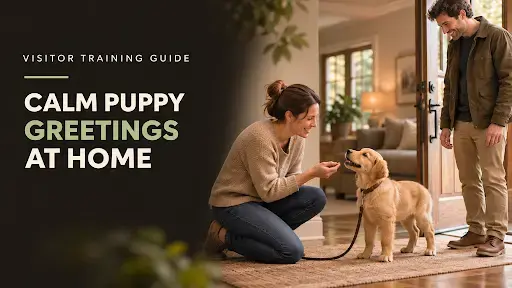
Teach greetings that keep all four paws on the floor. Prevent a rush toward guests while your puppy is still learning.
The AKC's guidance on stopping jumping recommends rewarding suitable greeting behavior. Attention can also be withdrawn briefly from jumping when it is safe to do so.
A visitor who pets the puppy while they jump may reward the very action you're trying to change. Ask guests to wait for a calmer moment.
When Your Puppy Chews Something Unsafe
Chewing is not a reason for physical punishment. Reduce access to shoes, wires, and other unsuitable items. Offer a safe chew that fits your puppy's size and chewing habits.
If you find damaged furniture later, punishment will not show your puppy which item they should chew. Improve supervision and reward appropriate chewing instead.
If you suspect your puppy swallowed a harmful object, contact a veterinarian promptly. Do not try to solve a possible medical emergency through training.
When Your Puppy Has a Potty Accident
Do not scold your puppy for an indoor accident. If you catch the event in progress, calmly offer a chance to finish in the correct place when feasible. Clean the area and review supervision.
The American Humane Society's housetraining guidance advises against punishment and nose-rubbing. It supports suitable bathroom opportunities and rewards for correct toileting.
For help building better household habits, NJ Puppy Whisperer offers house training solutions.
When Your Puppy Barks or Becomes Overwhelmed
First decide whether your puppy needs help. Barking may reflect excitement, attention-seeking, fear, or another concern. Do not ignore distress simply to make the sound stop.
For attention-related barking, avoid turning each bark into an exciting exchange. Meet real needs, reduce triggers, and reward calm communication when it occurs.
If your puppy becomes overwhelmed around children or visitors, increase distance and allow rest. A frightened puppy needs a safe exit from the situation, not forced contact.
Which Puppy Discipline Techniques Should You Avoid?
Avoid methods that rely on pain, intimidation, or fear. They may interrupt an action without teaching your puppy what to do instead. Humane discipline uses safe limits while protecting the puppy's welfare.
Why Hitting, Yelling, and Intimidation Are Unsafe Choices
Do not hit, kick, pin, scruff-shake, or frighten a puppy. Avoid painful leash corrections and aversive tools, including shock, prong, and choke collars.
The AVSAB Humane Dog Training Position Statement explains the profession's reward-based recommendation and concerns about aversive methods.
Research adds useful context. A 2020 study published in PLOS ONE observed 92 dogs attending training schools in Portugal. Dogs in aversive training groups showed more stress-related signs than those in reward-based training settings.
The groups included 28 dogs in aversive training, 22 in mixed-method training, and 42 in reward-based training. The study was observational. Dogs were not randomly assigned, and it did not test a universal method for disciplining young puppies.
These findings support welfare concerns. They do not predict how any one puppy will respond or how quickly a behavior will change.
Why Delayed Punishment Does Not Teach the Right Lesson
Suppose you return home and find a chewed shoe. Scolding your puppy then does not provide a clear lesson about which item was suitable to chew earlier.
The same issue applies to a puddle found after the event. Punishment does not teach where the puppy should have gone. It may make the puppy afraid of your response.
Instead, change the setting and reward the correct action when it happens. Prevention gives the puppy fewer chances to practice a problem. Timely rewards show the new rule.
When Briefly Ending Play Can Be Appropriate
You can calmly end a game when playful biting becomes too rough. If the puppy keeps grabbing hands, stop the interaction and allow a brief pause.
This is different from frightening the puppy or leaving them alone in distress. The aim is to stop rewarding rough play and make suitable play possible again.
Only use this approach when the situation is safe and the biting appears playful. If your puppy is scared, hurt, or overwhelmed, respond to that need instead.
Why a Crate Should Not Be Used as Punishment
A crate or resting space should remain a safe place. Do not use it to frighten your puppy, threaten them, or impose prolonged isolation after a mistake.
A puppy may need a calm rest break after intense play. Make that a care decision rather than a harsh consequence. Keep the resting area comfortable and avoid forcing a distressed puppy into it as discipline.
The RSPCA's dog behavior guidance supports kind handling, rewards, safe spaces, and consistent responses rather than shouting or punishment.
How to Set Consistent Puppy Rules at Home
Consistency makes household boundaries easier to learn. A puppy may struggle when one person rewards jumping while another tries to stop it. Agree on the response before common problems arise.
Agree on the Same Responses Across the Household
Choose clear rules for greetings, play, chewing, and access to household spaces. Explain what everyone should do when a problem occurs.
For jumping, family members can wait for four paws on the floor before offering attention. For biting, each person can stop rough play and guide the puppy toward a toy.
NJ Puppy Whisperer's positive canine leadership coaching describes shared household expectations and owner communication. Here, leadership means calm, predictable guidance. It does not mean physical dominance.
Keep the language simple. Everyone should know what action to reward and what to change in the environment.
Keep Children Safe During Training
Adults should supervise puppy interactions with children. Children should not be responsible for correcting biting, guarding, or threatening behavior.
Teach children to avoid rough games, chasing, forced hugs, and disturbing a resting puppy. Give the puppy room to leave an interaction.
When play becomes too intense, an adult should calmly separate the puppy and child. Reward safe, calm behavior when the puppy is ready.
Families can find more age-appropriate interaction advice through NJ Puppy Whisperer's raising puppies with kids resource.
Safety comes before training goals. If a puppy shows repeated fear or threatening behavior around children, seek qualified guidance.
Use a Seven-Day Household Consistency Log
A short log can show which situations lead to trouble. It can also reveal whether family members are responding in the same way. Seven days is a useful recording window, not a proven deadline for behavior change.
The example below shows how to record an event without calling a puppy stubborn or bad. It uses a hypothetical greeting problem, not a real client case.
Log Field | Completed Example |
Date and time. | Monday, 5:30 p.m. |
Observed behavior. | Puppy jumped toward a visitor twice. |
Context and trigger. | Visitor entered and spoke in an excited voice. |
Safety and care needs. | Puppy appeared excited; no clear distress was seen. |
Immediate action. | Caregiver managed access and slowed the greeting. |
Alternative rewarded. | Four paws on the floor received praise and a treat. |
Caregiver consistency. | Visitor and caregiver followed the same greeting rule. |
Outcome. | Puppy completed one calmer greeting. |
Next adjustment. | Prepare treats and manage access before the next visit. |
Use the same fields for later events. Record what you can see, what happened before it, and what you changed. Avoid guessing at your puppy's motives.
At the end of the week, look for patterns. Perhaps biting happens most often during long play sessions. Perhaps jumping rises when visitors become animated. Those observations help you choose a better setup.
A log does not replace veterinary or behavior assessment. Its value is helping a household make more consistent, informed decisions.
When Should You Seek Professional Help?
Seek help when behavior creates danger, suggests pain, or involves serious fear. Stronger punishment is not an appropriate next step. A veterinarian or qualified behavior professional can help identify needs that a simple home response may miss.
Signs That Need Veterinary Assessment
Contact a veterinarian if behavior changes suddenly, your puppy seems painful, or usual bathroom habits change without a clear reason. A health concern may appear as irritability, avoidance, or unusual reactions to handling.
Possible swallowing of harmful objects also requires prompt veterinary advice. Do not wait for a training plan to solve a medical risk.
A veterinarian can assess health concerns and help decide whether further behavior support is needed. Online descriptions cannot establish a diagnosis.
Signs That Need Qualified Behavior Support
Repeated bites that cause injury, threatening behavior, growing fear, or unsafe reactions around children warrant professional assessment. Seek a qualified reward-based trainer or veterinary behavior specialist with suitable experience.
Describe what your puppy does, what happens before it, and the setting. Bring observations from your household log if available.
Avoid providers who recommend physical intimidation as the answer to severe behavior. The goal is to understand the cause, manage risk, and build safe behavior through an appropriate plan.
Frequently Asked Questions
These answers cover common decisions owners face during everyday puppy care. They are general guidance, not an individual behavior diagnosis. Serious injuries, marked fear, or sudden changes need more than an online training tip.
How Do You Discipline a Puppy Without Hitting?
Calmly stop unsafe behavior, check the puppy's needs, and guide them toward a suitable action. Reward the better choice. Use supervision, barriers, and clear household rules to prevent repeat mistakes. There is no need to hit or frighten your puppy.
Is It Okay to Tell a Puppy No?
A calm interruption word can be part of your communication. Yet a puppy may not know what the word means. Follow it with clear guidance and reward the action you want. Avoid repeating the word loudly or using it to frighten the puppy.
What Should I Do When My Puppy Bites Me?
For playful mouthing, pause rough play and offer a suitable toy. If the puppy keeps biting, calmly end the interaction for a short break. Seek qualified help when biting causes injury, appears fear-related, or becomes hard to manage safely.
Should I Punish My Puppy for Peeing Inside?
No. Clean the area, review bathroom opportunities, and reward toileting in the correct place. Do not rub your puppy's nose in waste or scold them after an accident. Ask a veterinarian about sudden or unusual changes.
How Do I Discipline a Puppy for Jumping on People?
Manage greetings and reward four paws on the floor. Ask visitors not to give attention during jumping. Make the greeting easier if the puppy is too excited. Use the same rule across the household so your puppy receives a clear message.
Should I Use a Crate as Punishment?
No. Keep the crate or resting space safe and comfortable. A puppy may need rest after exciting play, but the break should support their welfare. Do not use confinement to frighten or threaten a puppy.
How Long Does It Take a Puppy to Learn Household Rules?
There is no fixed deadline for every puppy. Age, environment, practice, and the behavior itself can affect progress. Watch for better choices across similar situations. If progress stops or the behavior becomes unsafe, review the setup and seek help.
When Should I Contact a Trainer or Veterinarian?
Contact a veterinarian for suspected pain, illness, sudden behavior changes, or unsafe ingestion. Seek qualified behavior support for serious biting, persistent fear, threatening behavior, or ongoing safety problems. A humane professional can help assess the situation without relying on intimidation.
Final Takeaway: Teach the Behavior You Want to See
The best puppy discipline creates a clear path from an unwanted action to a better one. Check what your puppy needs, keep the moment safe, prevent repeated mistakes, and reward an appropriate choice.
A puppy who chews a toy instead of a shoe has learned something useful. So has a puppy who greets a guest with four paws on the floor. These small choices build stronger habits when the whole household responds in a consistent way.
Keep expectations suited to your puppy's age and comfort. Do not treat fear, pain, or distress as disobedience. If behavior becomes unsafe or difficult to manage, choose qualified support rather than stronger corrections.
For families who want help applying these principles at home, humane puppy training support can help turn daily problems into clear, shared routines.


Comments