


How to Calm a Dog Down Instantly: Safe First Steps and Warning Signs
Quick Answer
If you're searching for how to calm a dog down instantly, first check for signs of illness or injury. Then reduce noise, create distance from triggers, and offer a quiet place your dog can choose. Use a familiar settle cue only if your dog is responsive. No technique guarantees instant calm.
Key Takeaways
The safest response depends on why your dog is upset. These points help you choose the right first action without making fear or physical distress worse.
Serious breathing trouble, collapse, abnormal gums, or a swollen abdomen with repeated unsuccessful retching need emergency veterinary care.
Reduce noise, movement, and unwanted contact before asking an excited or frightened dog to do anything.
A quiet, familiar resting place can help, but the dog should be free to use it voluntarily.
Trembling, hiding, freezing, stiffness, and escape attempts may signal fear rather than playful excitement.
Previously learned settle cues may help a responsive dog, but new commands are unlikely to help during panic.
Avoid shouting, physical punishment, forced restraint, and exposure to triggers that overwhelm your dog.
Sudden unexplained agitation or recurring severe fear deserves veterinary assessment and, when appropriate, qualified behavior support.
No reviewed veterinary or animal-welfare source establishes a method that reliably calms every dog instantly.
Start by checking safety and your dog's response to the situation. Once urgent health concerns are ruled out, aim to make the surroundings feel safer rather than forcing stillness.
How to Calm a Dog Down Instantly Without Making Fear Worse
The safest first steps are to rule out danger, lower stimulation, offer space, and watch your dog's response. You can start these actions at once. Emotional recovery, though, may take longer. A frightened dog should not be expected to relax on command.
Use the following sequence for a dog that is safe to manage at home. If you see severe physical symptoms, skip the calming steps and seek veterinary care.
Step 1: Check for Medical or Safety Warning Signs
Look for an abrupt change from your dog's usual behavior. Serious breathing trouble, collapse, weakness, or unusual gum color may point to an emergency.
Repeated attempts to vomit without bringing anything up, especially with a swollen abdomen, are also urgent warning signs. The American Animal Hospital Association's emergency guidance explains why serious physical symptoms need prompt veterinary care.
Check for immediate hazards, too. A frightened dog may bolt through an open door or move toward traffic. Secure exits when you can do so safely.
Do not assume sudden restlessness is a training problem. If your dog appears seriously ill, contact an emergency veterinarian immediately.
Step 2: Reduce Noise, Movement, and Other Triggers
Make the space less busy. Turn down loud sounds, stop rough play, and ask people to give the dog room. Move away from a stressful object or person if a safe route is available.
For an excited dog, fewer greetings and less movement may help prevent further excitement. For a frightened dog, greater distance from the threat is often more useful than repeated commands.
Avoid chasing, cornering, or dragging the dog toward something it fears. Your goal is to reduce pressure, not win a contest over obedience.
Sometimes the simplest change is closing a door between the dog and an active room. In other cases, asking visitors to stop approaching may be enough to make the setting easier.
Step 3: Offer a Quiet Place the Dog Can Choose
Give your dog access to a familiar, comfortable area. A bed in a quiet room may work. Some dogs prefer an established crate or a sheltered resting spot.
The RSPCA's safe-space guidance supports creating a comfortable refuge that dogs can use by choice.
Keep the area away from unnecessary traffic. Allow the dog to leave if it wishes. Avoid shutting a frightened dog inside an unfamiliar crate or forcing it into a confined space.
A resting place is most helpful when the dog already knows it feels safe. It should not become a place where the dog is sent as punishment.
Step 4: Watch Body Language and Let the Dog Set the Pace
Notice your dog's whole body, not just its barking or movement. A loose, playful dog may still welcome interaction. A dog that crouches, freezes, trembles, or tries to escape needs less pressure.
Don't move closer simply because the dog becomes quiet. Silence can occur during fear as well as relaxation.
Look for changes over time. Does the dog choose to lie down? Is it moving away from the trigger? Does its body appear less tense?
These observations help guide your response. They cannot prove the cause of distress or rule out illness.
Step 5: Use a Familiar Settle Cue When the Dog Is Ready
If your dog is attentive and comfortable, try a cue it already knows. A trained request to go to a bed or mat may offer a clear alternative to jumping or pacing.
Use a calm voice. Reward the response if the dog can engage without distress. The American Kennel Club's emergency-training guidance discusses the value of preparing useful behaviors before challenging situations arise.
Do not repeat commands when your dog is too frightened to respond. Instead, reduce pressure and return to safety and comfort.
A familiar cue is a tool, not an instant cure. If it doesn't help, reassess the setting rather than increasing your demands.

Is Your Dog Excited, Frightened, or Possibly Unwell?
Different causes of restlessness call for different actions. Excitement may respond to a quieter setting and a familiar routine. Fear calls for safety and distance. Possible illness calls for medical attention.
The Immediate Dog-Calming Decision Matrix below combines these choices into one practical reference. It uses visible clues, but it cannot diagnose a medical or behavioral condition.
Observed Situation | Possible Clues | Safest First Action | Avoid | When to Seek Help |
Possible medical emergency | Collapse, serious breathing trouble, abnormal gums, swollen abdomen, or unsuccessful retching | Contact an emergency veterinarian immediately | Waiting for calming exercises, food, or exercise | Emergency care now |
Fear or panic | Trembling, hiding, freezing, escape attempts, or defensive behavior | Secure the area, increase distance, and offer voluntary refuge | Forced contact, punishment, or unwanted exposure | Seek help for severe or recurring fear; urgent care for physical danger |
Manageable excitement | Playful movement, jumping, and continued response to familiar cues | Lower stimulation and reward a known settling response | Rough play, repeated shouting, or unfamiliar demands | Seek training help when the pattern disrupts daily life |
Unexplained agitation | New pacing, unusual panting, discomfort, or inability to rest | Check surroundings, temperature, recent activity, and other symptoms | Assuming anxiety or adding vigorous exercise | Call a veterinarian for new, persistent, or worsening signs |
This matrix is an editorial decision aid based on veterinary and welfare guidance. It is not a tested clinical tool. The same sign can have several causes, so use the whole situation and seek medical advice when something seems wrong.
Signs of Manageable Excitement
An excited dog may jump, move quickly, or seek attention when guests arrive. It may still respond to a known cue or choose to move away from the activity.
If your dog otherwise seems well, lower the level of interaction. Stop energetic games and allow a quiet break. Reward calm choices when the dog is ready.
Excitement is not automatically a problem. Dogs need play and social activity. The concern is whether they can cope with the setting and recover afterward.
Signs of Fear or Panic
Fear can look like shaking, hiding, freezing, pacing, or attempting to escape. Some dogs become stiff or defensive when approached. Others seek contact with a trusted person.
The RSPCA's dog body-language guidance explains how posture and other signals help owners assess a dog's emotional state. VCA Animal Hospitals' overview of fears and anxiety also describes varied signs of distress.
Give fearful dogs room to choose where they feel safest. Do not force a greeting, touch, or training task while they are struggling.
A dog that becomes quiet and motionless may still be frightened. Watch for relaxed behavior rather than judging success by silence alone.
Signs That Need Veterinary Attention
New, unexplained pacing or panting deserves care, especially when it differs from your dog's normal habits. Pain, overheating, illness, and fear can produce overlapping signs.
Check the surroundings and recent activity without delaying urgent treatment. If symptoms are persistent, worsening, or hard to explain, contact your veterinarian.
Severe physical signs move the decision out of ordinary home calming. A dog that collapses, struggles to breathe, or repeatedly retches with a swollen abdomen needs emergency help.
What Helps in Common Dog-Calming Situations?
The best immediate response changes with the trigger. A noisy visitor, a thunderstorm, and unexplained pacing may all make a dog restless. Yet the same calming tactic will not suit every case.
Use the following situations as illustrations, not fixed diagnoses. If the dog's behavior suggests injury or illness, prioritize veterinary care.
When Guests Arrive and Your Dog Jumps
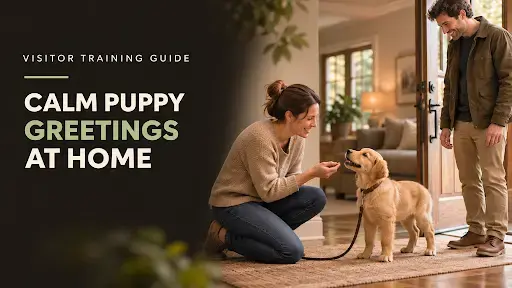
Reduce the intensity of the greeting. Ask visitors to speak softly and avoid exciting the dog with repeated attention.
If your dog is comfortable, guide it toward a familiar resting area. Use a known cue only when it can respond. Reward suitable calm behavior without forcing contact.
Children need added care around an overstimulated dog. Separate them when necessary and supervise every interaction. Families can find further household guidance in raising puppies with kids.
If the dog backs away, freezes, or appears defensive, treat the situation as possible fear. Stop the greeting and create distance.
When Fireworks or Thunderstorms Cause Fear
Secure doors and other exits. Offer access to a quieter room or familiar shelter. Let the dog hide if it chooses.
Some dogs seek their owners during loud events. Stay nearby if your dog wants company. Others need distance and a place where nobody approaches them.
Cornell University's guidance on fear of fireworks and thunderstorms supports safe shelter and planning for dogs with noise fears.
For severe or recurring fear, talk with your veterinarian before future events. A planned treatment approach is more appropriate than trying new remedies during panic.
When a Puppy Becomes Overstimulated After Play
End the exciting activity. Reduce noise and offer a familiar place to rest. Check basic needs, including access to water, a bathroom break, and a comfortable temperature.
A puppy that has been playing hard may need a calmer setting. Avoid adding more chasing, rough handling, or repeated commands when it is already struggling to settle.
If the puppy remains alert and comfortable, reward quiet choices. Give it time to disengage from the activity.
Do not explain all unusual behavior as tiredness. Marked weakness, abnormal breathing, or sudden distress needs medical attention.
When Your Dog Paces or Pants Without an Obvious Reason
First, look at the conditions. Is the room hot? Has your dog just exercised? Is there a loud sound nearby? Does it seem uncomfortable when moving?
If no clear reason emerges, contact your veterinarian, especially when the behavior is new or persistent.
Do not automatically prescribe a long walk to tire the dog out. Extra exertion may be unsafe when pain, heat stress, or illness is involved.
The right action here is assessment, not distraction at any cost.
Should You Pet, Feed, or Distract a Dog to Help Them Calm Down?
Gentle comfort and food may help in some situations. Neither is a universal remedy. The dog's willingness to engage should guide your choice.
Start with a safe environment. Then offer only the kind of interaction your dog appears to welcome. If an approach increases distress, stop it.
Offer Comfort Without Forcing Touch
You may sit nearby, speak softly, or offer gentle contact when your dog seeks it. A frightened dog does not need to be ignored solely because it is afraid.
Let the dog approach you. If it turns away, stiffens, or retreats, respect that choice.
Avoid tight hugs, pinning, or holding the dog still to make it appear calm. Physical restraint can add pressure and may increase the risk of a defensive reaction.
Use Treats Only When the Dog Is Receptive
Food can reward a familiar behavior when a dog is comfortable enough to participate. For instance, a responsive dog may accept a treat after choosing its bed.
A frightened dog may refuse food. VCA's discussion of separation distress describes how reduced engagement with food can appear alongside distress behaviors.
Refusing a treat does not diagnose anxiety. It is simply one clue that the dog may not be ready for training.
Never use food to delay emergency care. Nor should you lure a frightened dog toward a trigger it is trying to avoid.
Know When Games or Enrichment Are the Wrong Choice
A familiar chew or quiet activity may suit a comfortable dog. It should remain an option, not a demand.
Vigorous games, forced sniffing, or prolonged exercise are poor choices for an animal showing panic, overheating, or possible illness. Adding stimulation can make the setting harder to handle.
Avoid presenting any toy, supplement, or activity as a proven instant fix. Watch what your dog actually needs. Sometimes less activity is the most useful change.
What Not to Do When Your Dog Is Agitated
Avoid methods that add fear, pain, or confusion. A dog that appears upset needs a safer setting, not harsher control. The American Veterinary Society of Animal Behavior's position statements support reward-based training and caution against aversive methods.
The Canadian Veterinary Medical Association's humane-training position also supports humane training methods.
Several common reactions can make a difficult moment worse:
Do not shout or repeatedly scold your dog. Loud voices may add stress or excitement.
Do not jerk the leash, pin the dog, or use physical dominance techniques. These actions can cause fear or injury.
Do not force a frightened dog toward guests, animals, sounds, or objects it fears. Increase distance instead.
Do not confine a panicked dog in an unfamiliar space as a quick fix. Offer a familiar refuge when safe.
Do not keep demanding commands when your dog cannot respond. Reduce the challenge and reassess its needs.
Do not give human medication, unapproved sedatives, or essential-oil remedies to force calm. Ask a veterinarian about suitable treatment.
Do not try to exhaust a dog with exercise before checking for signs of illness, injury, or overheating.
The point is not to avoid all guidance. It is to match your response to the dog's condition. A gentle cue can be useful for an engaged dog, while the same request may be pointless during panic.
If handling raises the risk of a bite, give the dog room and seek qualified help. Do not put your face close to a frightened dog's mouth or corner it to force cooperation.
When Should You Call a Veterinarian Instead of a Dog Trainer?
A veterinarian should assess sudden unexplained agitation, possible pain, and serious physical symptoms. Training support is more suitable for recurring excitement or learned behavior patterns once health concerns have been addressed.
A dog trainer cannot rule out illness. Likewise, a medical check does not automatically resolve a lasting fear problem. Some dogs need both forms of support.
Emergency Signs That Cannot Wait
Seek emergency veterinary care immediately for collapse, severe breathing difficulty, or other signs of serious physical distress. Pale, blue, or otherwise abnormal gums are also concerning.
An especially important warning is repeated unsuccessful retching with abdominal swelling or severe restlessness. Cornell University's guide to gastric dilatation-volvulus, or bloat describes this life-threatening emergency.
Do not try to diagnose bloat at home or wait for every sign to appear. Contact an emergency veterinary service and follow its directions.
Calming exercises, treats, and walking should never delay urgent care.
Repeated Fear or Agitation That Needs a Plan
Book a veterinary assessment when fear or agitation is severe, recurring, or getting worse. A professional can review possible health causes and discuss suitable care.
For ongoing behavioral concerns, a qualified reward-based professional may help develop a plan. Severe fear may call for a veterinarian with behavioral expertise.
Make a short record of the pattern. Note the trigger, setting, visible behavior, and what happened afterward. This can help a professional understand the concern without relying on a vague description such as 'hyper' or 'stubborn.'
How to Help Your Dog Settle More Easily Next Time
Immediate calming steps manage the present situation. Future training helps your dog practice useful responses when it feels safe. Keep those goals separate.
Teach skills during quiet moments, not during a crisis. Work in manageable stages and stop when your dog appears distressed.
Teach a Relaxed Mat or Bed Routine
Choose a comfortable place where your dog already likes to rest. Reward voluntary movement toward it and calm behavior there.
Over time, pair the behavior with a simple cue. Practice when distractions are low. Add harder settings only after your dog is comfortable with the earlier steps.
The site's guide to positive puppy commands offers related training context.
Do not expect a new mat cue to end severe fear. A learned behavior is most useful when your dog can still pay attention.
Practice Predictable, Low-Stress Household Routines
Plan around known triggers. If visitors cause intense excitement, arrange calmer greetings. Give your dog access to rest before the household becomes busy.
Agree on simple rules for family members. Children and adults should respect the dog's resting space and avoid rewarding unwanted excitement with rough attention.
NJ Puppy Whisperer's positive canine leadership coaching discusses household guidance and family training routines.
For fear linked to specific triggers, future behavior work must be gradual. VCA's introduction to desensitization and counterconditioning explains controlled exposure and creating more positive responses. This is planned training, not a technique to force on a panicked dog.
Get Professional Help for Recurring Problems
Ask your veterinarian about repeated fear, distress, or unusual behavior. Medical issues should be assessed before treating a sudden change as a training concern.
For everyday puppy manners and household excitement, a humane trainer can help owners build clear, realistic routines.
New Jersey families considering in-home puppy coaching can review NJ Puppy Whisperer's puppy training questions and service information. The business describes service in Monmouth, Ocean, Mercer, and Burlington counties.
Training services are not a replacement for emergency veterinary care or specialist medical treatment for serious behavior problems.
Frequently Asked Questions
These answers address common decisions during a stressful moment. Use them with the safety checks above, rather than treating each answer as a universal calming method. What helps one dog may not suit another, even in a similar setting.
Can You Really Calm a Dog Down Instantly?
No technique is guaranteed to calm every dog immediately. You can reduce stimulation and improve safety at once, but the dog's response will vary. A mildly excited dog may settle when activity stops. A frightened dog may need more time and a safer setting. Check for medical warning signs before trying behavioral steps.
What Is the Fastest Safe First Step for a Hyper Dog?
Check that your dog appears physically well, then reduce the source of excitement. Stop rough play, lower household activity, and offer a quiet break. If your dog is responsive, use an established settling cue. Sudden or unexplained agitation needs a different response and may require veterinary care.
Should I Ignore or Comfort a Scared Dog?
You can offer calm company when your dog seeks it. Do not force touch or insist that it approach you. Some dogs welcome gentle contact, while others prefer a quiet hiding place. Respect the dog's choice and focus on reducing exposure to the frightening trigger.
Can Treats Help an Overexcited Dog Settle?
Treats may help reinforce a familiar calm behavior when the dog is receptive. Offer a reward after a suitable response rather than using food to force interaction. A distressed dog may refuse treats. That refusal alone cannot identify the cause. Never let food-based calming attempts delay medical care.
Why Won't My Dog Listen When Frightened?
Fear can make it difficult for a dog to focus on learned cues. Repeating a command with greater force rarely addresses the reason for distress. Give the dog space, lower stimulation, and allow time to feel safer. Practice useful cues separately in calm settings so they become familiar.
Can a Quiet Room Help During Fireworks?
A familiar, quieter room may help reduce exposure to some noise and activity. Keep exits secure and let your dog choose a comfortable resting place. Do not force an unfamiliar crate or shut a panicked dog somewhere unsafe. For severe noise fear, discuss a plan with your veterinarian before the next event.
Can Pain or Illness Make a Dog Suddenly Restless?
Yes. Discomfort, heat-related problems, and illness can be associated with pacing, panting, or difficulty settling. Symptoms may overlap with fear. A sudden unexplained change deserves veterinary advice. Collapse, serious breathing trouble, or abdominal swelling with unsuccessful retching requires emergency attention.
When Should I Seek Professional Help for an Anxious Dog?
Seek veterinary advice when fear is severe, frequent, worsening, or disrupting normal life. Sudden new behavior also deserves a health check. A qualified reward-based behavior professional may then help with a suitable plan. Emergency physical symptoms require immediate veterinary care rather than a routine training appointment.
The most useful sign of progress is not simply less noise. Look for a dog that can move comfortably, choose to rest, and engage without obvious distress. If those signs remain absent, reassess the situation and seek advice.
Final Checklist for Helping Your Dog Calm Down Safely
Calming starts with understanding what your dog needs right now. A safe response may involve reducing excitement, helping a frightened dog find refuge, or seeking medical care. Choose the action that fits the situation rather than trying every calming trick in turn.
Use this seven-step checklist when your dog becomes unusually restless or upset. If emergency signs are present, contact a veterinarian immediately instead of completing the sequence.
Check for danger. Look for serious physical symptoms, unsafe surroundings, and sudden changes from normal behavior.
Identify the likely trigger. Notice recent noise, play, visitors, unfamiliar people, or changes in the environment.
Reduce stimulation. Stop exciting interactions and lower avoidable noise or movement.
Create safety and distance. Secure exits and keep the dog away from threats when you can do so safely.
Offer voluntary refuge. Make a familiar quiet place available without forcing confinement or contact.
Use familiar cues only when appropriate. Reward an already learned calm response if your dog is receptive and comfortable.
Stop and seek help when needed. End actions that increase distress and contact a veterinarian or suitable behavior professional as indicated.
A dog that settles today may still need future support. Repeated patterns deserve attention, even when each episode eventually ends. Record the likely triggers and discuss persistent concerns with a qualified professional.
For ordinary excitement, patient reward-based coaching can build calmer household habits. For fear or possible illness, safety and veterinary assessment take priority. No fixed number of seconds can tell you when a dog should feel calm. A better goal is a dog that is safe, comfortable, and able to recover at its own pace.


Comments