


Dog Behavior Modification: Methods, Safety, and Progress Guide
Quick Answer
A practical approach to dog behavior modification starts by identifying triggers, managing the environment, teaching safer responses, and helping dogs build better emotional associations. It goes beyond basic obedience training. Low-risk habits may improve with home practice, but aggression, severe fear, and sudden behavior changes call for qualified professional or veterinary help.
Key Takeaways
A sound behavior plan starts with understanding the problem. These seven points can help owners choose safer next steps.
Dog behavior modification addresses what a dog does, what happens around it, and the feelings that may drive its response.
Obedience training teaches useful cues, while behavior modification addresses wider patterns, triggers, and emotional responses.
Reward-based training and humane management are the recommended foundation for changing behavior.
Desensitization reduces the strength of a trigger, while counterconditioning helps build a more positive emotional response.
A simple behavior log can reveal patterns that are easy to miss during daily life.
Progress should include signs of comfort and recovery, not just fewer unwanted actions.
Bite risk, severe distress, suspected pain, or sudden behavior changes warrant veterinary or qualified professional help.
The safest next step depends on the dog's response and the level of risk. Start with observation, protect the dog's welfare, and seek help before a serious problem grows.
What Is Dog Behavior Modification?
Dog behavior modification aims to change a behavior pattern and, when needed, the feelings linked to it. The process starts by asking what happens before and after the behavior. It then uses safe changes to the setting and humane learning methods to help the dog respond in a new way.
The MSD Veterinary Manual's guide to behavior modification in dogs describes methods such as shaping, desensitization, counterconditioning, and response substitution. Each serves a different purpose. A useful plan draws on the methods that fit the case, rather than applying one technique to every dog.
How Behavior Modification Differs From Obedience Training
Basic obedience teaches a dog to respond to cues. These may include sit, come, stay, and other useful skills. Behavior modification asks a wider question: why does the dog react this way in this setting?
A dog may sit calmly in the kitchen yet become frightened when a visitor arrives. The sit cue does not, by itself, resolve that fear. A behavior plan may need to reduce the dog's exposure to the trigger and change how it feels about visitors.
Basic skills still have value. The site's guide to foundational positive puppy commands covers that separate learning goal. A calm, familiar cue may support a behavior plan, but it cannot replace the plan itself.
Why Behavior Context Matters
Two dogs may bark at the same doorbell for different reasons. One may expect a visitor and become excited. Another may feel unsafe. A third may have learned that barking leads someone to open the door.
The sound is the same. The likely causes are not.
That is why a behavior label alone offers little guidance. An owner needs to know what the dog saw, heard, felt, or wanted before the event. The response of other people also matters. Good plans depend on patterns across several events, not one guess about a dog's motives.

Why Do Dogs Develop Unwanted Behavior Patterns?
Unwanted behavior may come from learning, fear, stress, poor health, or a mix of causes. The first task is to find what can be observed. Owners should avoid deciding that a dog is stubborn, dominant, or defiant based on a single action.
Triggers, Learning History, and Environmental Consequences
A trigger is something that happens before a response. It may be a sound, person, animal, place, movement, or event. Some triggers are easy to spot. Others may be part of a larger pattern, such as being tired or having little room to move away.
Behavior can also be shaped by what follows it. A dog that jumps and gets attention may jump more often. A dog that moves away from a noisy room may learn that leaving brings relief.
These patterns are not always deliberate choices. They reflect what the dog has learned in a given setting. Recording events helps owners test whether a pattern repeats.
Fear, Stress, Pain, and Medical Contributors
A new behavior problem may have a medical cause. Pain, illness, or changes in physical comfort can affect how a dog responds to touch, movement, or other animals.
The ASPCA's guidance on canine aggression notes that aggression can arise for different reasons, including some medical problems. Owners should not assume that a sudden growl or snap is simply a training issue.
A veterinary exam is especially important when behavior changes without a clear cause. Changes in appetite, movement, sleep, or tolerance of handling add useful context. A qualified trainer should not attempt to diagnose or treat a medical condition.
How to Read Body Language in Context
A dog communicates through its whole body. Movement, posture, facial tension, and the way it responds to nearby events can all give clues.
The RSPCA's guide to understanding dog behavior describes signs that may occur when dogs are relaxed, worried, or defensive. A soft body and loose movement can suggest comfort. Stiffness, avoidance, a lowered posture, or growling may show that something is wrong.
No single sign proves one emotion. Lip licking, for instance, must be judged alongside the setting and other body signals. Look for changes from the dog's normal behavior. Also note how long it takes to settle after a stressful event.
Dog Behavior Modification Methods That Support Safer Change
Humane behavior work uses a mix of management, learning, and emotional support. The method should match the problem and the dog's response. For a simple household habit, teaching a better action may be enough. Fear-based problems often need a more careful plan.
Management and Preventing Repeated Trigger Exposure
Management changes the setting so a dog has fewer chances to repeat an unwanted or unsafe response. A gate can help prevent jumping during busy arrivals. More distance may help a worried dog avoid a stressful encounter.
Management does not always change the dog's feelings. It does create safer conditions for learning. It can also stop a problem from growing while an owner seeks expert advice.
The IAABC Foundation's practice standards stress animal welfare, careful management, and avoiding prolonged distress. Dogs should have a way to take a break when this is safe and possible. For severe fear or bite risk, a professional should help design the safety plan.
Rewarding an Alternative Behavior
An alternative behavior gives the dog something useful to do instead. For a friendly dog that jumps during greetings, keeping all four paws on the floor may earn attention.
The new response should be easy enough for the dog to perform. Reward it at the right moment. Then repeat the practice in settings where the dog can succeed.
This approach works best when everyone in the home responds in a consistent way. It is not a substitute for treatment when fear, panic, or aggression drives the original behavior.
Desensitization: Working Below the Dog's Distress Threshold
Desensitization uses very mild exposure to a trigger. The aim is to help a dog remain comfortable while it learns that the event is manageable. The strength of the trigger may depend on distance, volume, movement, or time.
The MSD Veterinary Manual's treatment guidance explains the role of gradual exposure and the risk of moving too fast.
Consider a dog that seems mildly concerned by a quiet household sound. A gentle version of that sound may be easier to tolerate than the full noise. If the dog becomes tense, avoids the area, or cannot settle, the exposure is too much.
Owners should not use this example to stage encounters involving aggression, panic, or severe fear. Those cases need an individual plan.
Counterconditioning: Building a Different Emotional Association
Counterconditioning aims to change how a dog feels about a trigger. A mild event that once caused worry may become linked with something pleasant.
For example, a dog may hear a soft household sound and then receive a valued reward. The sound must remain mild enough that the dog is comfortable and able to engage.
This differs from rewarding a trained action. Counterconditioning targets the dog's emotional response. The two methods can work together, but they are not identical.
When the dog shows distress, do not make the trigger stronger to force progress. Stop or reduce exposure and reassess the plan.
Methods to Avoid: Flooding, Fear, and Punitive Corrections
Flooding means exposing a dog to an intense fear trigger without a safe way to escape. A dog may become quiet while still feeling distressed. Silence alone does not show that the dog feels better.
The American Veterinary Society of Animal Behavior's position statements recommend reward-based methods for dog training and behavior modification. Its 2021 humane training statement and 2025 clarification advise against aversive methods, including painful or fear-based corrections.
Avoid punishment intended to stop growling, force a fearful dog closer to a trigger, or make a dog submit through physical confrontation. These steps do not address the cause of the response and may create further safety concerns.
How to Start a Low-Risk Behavior Modification Plan
Start with a specific problem, a safe setting, and a way to measure change. Home practice is most suitable for ordinary habits with no known bite risk, serious fear, or medical concern. The following process is a general learning framework, not a treatment plan for complex cases.
Step 1: Describe the Behavior Without Guessing Its Cause
Write what the dog does in clear terms. For example, 'jumps up and places both front paws on guests' is easier to assess than 'acts badly.'
Include where it happens, who is present, and what took place just before it. A clear description makes later progress easier to judge.
Step 2: Check Safety and Possible Health Concerns
Before practice begins, ask if anyone could be hurt. Check for bites, threatening behavior, severe distress, or a sudden change in temperament.
If these concerns are present, manage access and contact a veterinarian or qualified behavior professional. Do not test how close the dog will let a person approach.
Step 3: Record Triggers and Immediate Outcomes
Watch for what happens just before and after each event. Note the dog's visible response and any signs of stress.
This is known as an antecedent-behavior-consequence, or ABC, record. The next section offers a worked table. A few well-described events are more useful than vague notes about a dog's mood.
Step 4: Make the Environment Easier and Safer
Reduce the chance of the unwanted action. For friendly greeting jumps, this may mean arranging calm arrivals with fewer people present.
Ask household members to follow the same plan. The site's consistent family coaching and household routines page explains its approach to shared cues and daily habits. Family consistency helps prevent mixed signals, though it cannot replace specialist care for serious behavior problems.
Step 5: Reinforce a Practical Replacement Response
Choose one safe action that meets the situation's needs. A dog that seeks friendly attention may be rewarded for keeping its paws down.
Practice when the dog is calm. Reward the action before jumping begins when possible. Avoid scolding or pushing the dog away. Keep the setting easy enough for success.
Step 6: Review Progress and Adjust the Plan
Count comparable events and watch the dog's comfort. Fewer jumps during ten similar greetings may suggest skill growth. A dog that avoids all greetings may show fewer jumps for a different reason.
Review the whole picture. Are events less intense? Does the dog settle faster? Can it move away freely? If distress grows, stop the exercise and seek guidance.
Behavior Modification Decision Kit
This kit helps owners record what happens, choose a safe next step, and track change. It combines a behavior log, a referral guide, and a worked household example. It is not a diagnostic test or a validated risk score.
The tools reflect the observation, assessment, and progress-review skills described in the IAABC's core competencies. They can also help an owner prepare for a veterinary or behavior consultation.
ABC Behavior Observation Worksheet
The ABC method separates what happened before an action from what the dog did and what happened next. The sample below is hypothetical. It shows the level of detail worth recording.
Observation Field | Illustrative Record |
Date and time | Tuesday, 6:15 p.m. |
Setting and people | Front hall, one familiar visitor. |
Antecedent | Visitor entered and spoke to the dog. |
Observed behavior | Dog jumped with both front paws raised. |
Approximate duration | About 3 seconds. |
Immediate consequence | Visitor spoke and reached toward the dog. |
Welfare signs | Loose body, no clear distress observed. |
Safety concern | Risk of knocking over a visitor. |
Follow-up action | Plan a calm greeting and reward paws on floor. |
A single record cannot prove that attention caused the behavior. Several similar events can reveal a pattern. Keep facts separate from guesses and avoid creating unsafe situations just to gather more data.
Behavior Problem and Referral Decision Matrix
The first decision is whether home practice is suitable at all. Use the following routes to match the observed problem with a safer starting point. These are general guidance categories, not clinical risk levels.
Observed Situation | First Safety Action | Suitable Next Step | When to Escalate |
Low-risk household habit | Reduce chances to rehearse it. | Reward a useful alternative and track results. | Seek a qualified trainer if it persists or worsens. |
Fear or avoidance without known injury risk | Reduce unwanted exposure and protect choice. | Seek help with a gradual, humane plan. | Consult a qualified behavior professional if distress continues. |
Sudden, unexplained behavior change | Maintain safety and note other symptoms. | Arrange veterinary assessment. | Seek prompt care based on the signs and severity. |
Aggression with bite risk or severe panic | Prevent unsafe encounters. | Obtain veterinary and qualified behavior guidance. | Seek help promptly; do not stage trigger tests. |
An ordinary puppy house-training concern is usually a different task from severe fear or aggression. Owners can consult the site's positive house-training guidance for that narrower issue. New or unexplained house-soiling changes may still need a veterinary check.
The matrix helps owners choose whom to contact. It cannot determine the cause of aggression, rule out pain, or predict how a dog will react in a future encounter.
Baseline and Progress Tracker
Track the same type of event over time. Record the number of chances the behavior could occur, not just the number of times it did occur. The following figures are fictional and show how an owner might organize a log.
Period | Comparable Greetings | Jumping Episodes | Typical Duration | Recovery and Comfort | Management Change |
Baseline | 10 | 8 | About 3 seconds. | Relaxed after greetings. | No set routine. |
Follow-up 1 | 10 | 5 | About 2 seconds. | Relaxed between greetings. | Calmer arrival setup. |
Follow-up 2 | 10 | 2 | About 1 second. | Loose posture and normal activity. | Paws-down rewards used. |
These counts are not real treatment results or expected rates of success. Their value lies in the method. Using a set number of similar greetings makes the records easier to compare.
The dog's welfare remains part of the result. A fall in unwanted behavior may come from less exposure or greater avoidance. For fear-based problems, comfort and recovery deserve as much attention as the event count.
A professional may also record episode length, trigger distance, changes in the setting, and notes from a veterinary review. No universal numerical target proves that behavior treatment is complete.
Worked Example: Reducing Jumping During Greetings
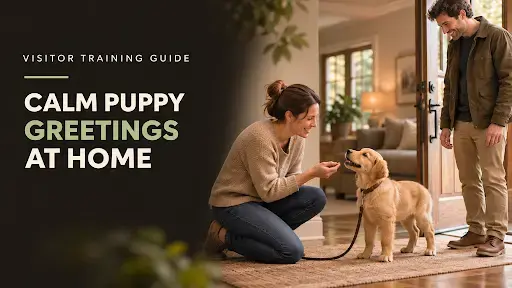
Imagine a healthy, friendly dog that jumps during greetings. There is no known aggression or severe distress. The owner sees that jumping often brings immediate attention.
The goal is not to make the dog avoid visitors. It is to teach a calmer way to greet them.
The owner first arranges brief, calm arrivals. Household members avoid rewarding jumps with excited attention. When the dog's paws stay on the floor, they offer praise or another valued reward.
They then record how many greetings occur and how many take place without jumping. They also note whether the dog remains relaxed and willing to interact.
If jumping grows more intense, the setting may be too exciting. The owner can make the practice easier and review the plan. If fear, guarding, or threats appear, this simple greeting exercise is no longer an appropriate model.
When Should You Seek Veterinary or Professional Help?
Seek qualified help when behavior presents a risk, causes marked distress, or changes without a clear reason. A safe response does not require owners to prove the cause first. Manage the setting, protect those involved, and arrange the right assessment.
Aggression, Bite Risk, and Resource Guarding
Growling, snapping, biting, or threatening behavior around food, objects, people, or other animals needs careful attention. The goal is to prevent injury while the cause and risks are assessed.
Avoid taking guarded items by force or provoking a response to test the dog's limits. Keep children and other vulnerable people away from situations that may be unsafe. Use safe separation and seek veterinary advice alongside skilled behavior support.
Some cases can improve with an individual plan. No responsible source can promise that every dog will become safe in every setting. Risk management may remain part of daily life.
Severe Fear and Separation-Related Distress
A dog that panics during absences needs more than an obedience cue. Severe distress may involve vocalization, escape attempts, damage, or other signs. These actions must be assessed in context.
The ASPCA's separation anxiety guidance explains why careful, gradual treatment matters. Increasing the length of absences without regard to the dog's response can make distress worse.
Do not force panic-inducing practice or assume the dog should simply learn to tolerate it. Seek a qualified professional with experience in separation-related cases and involve a veterinarian when appropriate.
Sudden Behavioral Changes or Signs of Pain
A dog that was once comfortable with touch may start avoiding it. A previously calm dog may begin snapping when moved. These changes deserve a health check, even if they look like training problems.
Record when the change began and whether eating, movement, sleep, or other habits also changed. Contact a veterinarian. Seek urgent care for signs of acute illness, injury, severe pain, or immediate danger.
Treating a medical problem and changing a learned response are different tasks. Some dogs may need both forms of support.
How to Choose a Qualified Dog Behavior Professional
Choose a professional based on the case, not a job title alone. Trainers, behavior consultants, applied animal behaviorists, and veterinary behaviorists may have different education, experience, and roles. Owners should ask what the person is qualified to assess and treat.
Questions About Qualifications and Case Experience
For ordinary puppy skills, a suitable reward-based trainer may be a good fit. Serious fear, aggression, and complex distress call for more specialized knowledge and close veterinary support.
Ask what training the professional has completed and how much work they have done with the same type of concern. Find out whether they refer cases beyond their scope. A title alone is not proof of competence.
Questions About Methods, Safety, and Veterinary Collaboration
A first discussion should make the proposed approach clear. These questions help owners understand the plan before agreeing to it.
What education and experience do you have with this type of behavior?
Which reward-based methods do you use, and what tools or corrections would be involved?
How do you check for possible medical causes and work with veterinarians?
What safety steps should our household follow before training begins?
How will you measure progress without provoking fear or aggression?
When would you refer us to a veterinary behaviorist or another specialist?
Look for clear answers and a plan tailored to the dog. Be cautious about guaranteed results, forced exposure, or claims that physical dominance is needed to solve a problem.
For New Jersey owners, NJ Puppy Whisperer provides information about its in-home puppy training approach through its common puppy training and in-home lesson questions. Its stated puppy coaching services should not be taken as proof of specialist clinical behavior treatment. Owners with high-risk concerns should check the provider's case-specific qualifications and referral options.
What to Expect From Progress Reviews
A useful review examines more than obedience or the number of unwanted actions. It considers the dog's comfort, safety, response to triggers, and ability to recover. It also checks whether the household can follow the plan.
The professional may ask owners to keep a short log and note changes in the home. The plan can then be adjusted when progress stalls or new concerns appear.
A review should leave owners with clear next steps. These may include easier practice, better management, a veterinary check, or a referral. There is no reliable fixed number of sessions that fits every behavior problem.
Frequently Asked Questions About Dog Behavior Modification
The questions below cover common decisions owners face before or during a behavior plan. The answers are general guidance. Dogs with serious safety or health concerns need individual assessment. Owners should use these answers alongside the safety and referral guidance above rather than treating them as a diagnosis or a universal treatment plan.
Can Dog Behavior Modification Help With Aggression?
Behavior modification may help some dogs with aggression, but it needs careful assessment and safety management. A veterinarian can check for medical factors. A qualified behavior professional can then help plan suitable care. Do not stage confrontations or attempt high-risk exposure exercises on your own.
Is Behavior Modification Different From Obedience Training?
Yes. Obedience training teaches responses to cues. Behavior modification also looks at triggers, learning history, and emotional responses. The methods can overlap, but teaching a command does not always resolve fear or distress.
Can I Work on My Dog's Behavior at Home?
Low-risk household habits may be suitable for humane home practice. Start with clear observations and manageable changes. Seek professional advice for persistent fear, worsening problems, bite risk, severe panic, or uncertain causes.
How Long Does Behavior Modification Take?
There is no standard timeline. Progress depends on the problem, the dog's health, past learning, daily setting, and response to the plan. Judge progress through comparable observations and welfare signs rather than a promised deadline.
What Is the Difference Between Desensitization and Counterconditioning?
Desensitization uses mild, gradual exposure to a trigger. Counterconditioning links that trigger with a better emotional experience. They often work together. The dog should remain comfortable, and serious cases need expert guidance.
What If My Dog Becomes More Fearful During Practice?
Stop or reduce the exposure. Give the dog a safe chance to recover and review what changed. Do not force more intense contact to make the dog get used to the trigger. Seek qualified help if distress persists or grows.
How Can I Tell Whether My Dog Is Improving?
Track comparable events, the number and length of unwanted responses, and how the dog acts afterward. Look for relaxed behavior and quicker recovery. Fewer incidents alone do not prove that fear has decreased.
When Does a Behavior Change Require a Veterinarian?
Contact a veterinarian when behavior changes suddenly, pain may be involved, aggression escalates, or severe distress appears. Signs of injury or acute illness may need urgent care. A health assessment helps avoid treating a medical problem as a training failure.
Building a Safer Long-Term Behavior Plan
Good behavior change begins with observation and sound judgment. A dog that jumps for friendly attention needs a different response from one that panics when left alone. Both may show unwanted behavior, but the goals and risks differ.
For low-risk habits, owners can start with clear records, safer routines, and rewards for useful alternatives. Keep the steps easy enough for the dog to succeed. Review what happens over time instead of judging the plan from a single day.
When fear, pain, aggression, or severe distress plays a role, professional assessment should guide the next step. Humane methods, sound management, and veterinary support can help protect welfare while a plan takes shape.
The Behavior Modification Decision Kit offers a simple way to begin. Record the event, assess safety, track meaningful change, and share the findings with a qualified professional when needed.
The aim is not just to stop an unwanted action. It is to help the dog live and respond more comfortably and safely.


Comments